
News classification
Contact us
- Add: No. 9, North Fourth Ring Road, Haidian District, Beijing. It mainly includes face recognition, living detection, ID card recognition, bank card recognition, business card recognition, license plate recognition, OCR recognition, and intelligent recognition technology.
- Tel: 13146317170 廖经理
- Fax:
- Email: 398017534@qq.com
Future artificial intelligence will bring changes in big cities
Future artificial intelligence will bring changes in big cities
If by 2030, what kind of uniform changes will be brought about by artificial intelligence to North American cities? Experts have stopped a century of research on artificial intelligence, and they think its impact will be more profound than we have imagined.
"One hundred years of artificial intelligence seminar" is the effort of Eric Horvitz, a technical seminar and management director at the Microsoft Institute.
Every five years, a panel of experts will evaluate the status of artificial intelligence and its future direction. The first expert group composed of experts in artificial intelligence, law, political superstition, policy and economic category was set up last autumn. They decided to explore the impact of AI on the common cities in the United States. The following are the 8 key changes they think that artificial intelligence will affect urban life in the next fifteen years.
1. transportation
AI
The speed of transition from fragmentary to smart traffic can be a surprise to the masses. For example, the driverless car will be widely used in 2020, and it will not only be domestic cars, including driverless trucks, driverless cars and group robots, but will become a universal demand of the society.
The concept of "Uber service" will gradually replace people's choice of using private cars to go out on the road, and will replace public transport and transform them into similar on-demand services. Going to work will give people a hard time. It can inspire people to get more efficient tasks away from home and increase their demand for parking lots, so as to thoroughly change the appearance of ancient cities.
More and more sensors will bring more data, which will enable administrators to plan models for group migration, preferences and purposes, which can seriously affect the design of urban infrastructure.
Nevertheless, in reality, people's lives are not as dull as a cycle, and the algorithm that enables machines to learn from and coordinate with people's daily life is the key to ensure smooth operation of unmanned traffic. The right to win this will be the key, because this will be the first time that people experience the fragmented artificial intelligence, and the consequences of experience will greatly affect the public's cognition of AI.
2. home and service robots
In the next 15 years, robots will become more popular, they can carry packages and office cleaning tasks, and so on. Mobile chip manufacturers have been trying to compress the strength of last century's large supercomputers to a chip, which will greatly enhance the computing power of robots.
Robots that connect through cloud data will be able to share data to slow down learning. Such as Microsoft's Kinectwill, such a low cost 3D sensor will slow down the development of AI perception technology, and the improvement of voice understanding will enhance the interaction between robot and human. Today, the robotic arm in the laboratory can evolve into a consumer of electronic equipment around 2025.
However, the cost and complexity of reliable hardware and the difficulty of completing the perceptual algorithm in the ideal world mean that such multi-functional intelligent robots are still apart from our life. Robots are now able to lose their opportunities in unlimited commercial use in order to carry out more future use in their future.
3. medical care
In the next 15 years, the impact of artificial intelligence on health care will be more regulatory, not technology. In the field of health care, the most capable transformation of AI is data acquisition. However, the US Food and Drug Administration failed to find a solution to deal with the dilemma between privacy and data acquisition. The effect of the data introduction of the electronic medical record is also poor.
In the absence of these obstacles, artificial intelligence can complete the automated diagnosis of information through the patient's medical records and superstitious literature. This digital assistant allows doctors to focus on the accuracy of group medical care while using their intuition and experience to point the whole process.
Through the statistical population level, patient records, wearable devices, mobile use and genome sequencing data will make the characteristic medical service ideal. Although the fully automated radiology department is not able to complete, a huge medical imaging data set will enable the machine learning algorithm to train artificial intelligence, which can help doctors stop "shunting" or scan the body, thereby increasing the amount of doctors' tasks.
Intelligent walking assistants, wheelchairs and even smart skeletons will help to keep the old people alive. Smart home technology will monitor their well-being and give them the ability to live independently. Robots can enter the hospital to carry out some complex obligations, such as sending supplies to the corresponding departments, or stopping stitching when the needle is placed correctly, but these obligations will only be semi-automatic, and also require the collaboration process between humans and robots.
4. Education
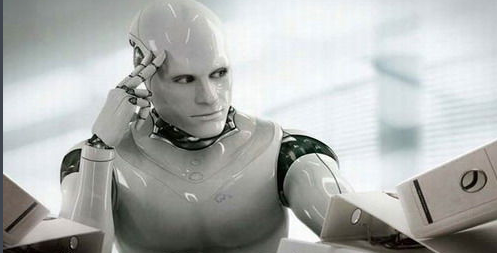
By the year 2030, classroom learning and group learning will be quite different. The large-scale open online course (MOOC) will stop the interaction between the intelligent tutor and its artificial intelligence technology, making the characteristic education more scale. Computer based learning is not a substitute for classroom teaching, but online tools will help students to stop learning in their own way and how to use their technology properly.
Educational fragmentary support for AI will learn human group hobbies, and analyzing these data, they can also promote the development of new educational research tools. Online teaching will expand the cover up of education and make learning
"One hundred years of artificial intelligence seminar" is the effort of Eric Horvitz, a technical seminar and management director at the Microsoft Institute.
Every five years, a panel of experts will evaluate the status of artificial intelligence and its future direction. The first expert group composed of experts in artificial intelligence, law, political superstition, policy and economic category was set up last autumn. They decided to explore the impact of AI on the common cities in the United States. The following are the 8 key changes they think that artificial intelligence will affect urban life in the next fifteen years.
1. transportation
AI
The speed of transition from fragmentary to smart traffic can be a surprise to the masses. For example, the driverless car will be widely used in 2020, and it will not only be domestic cars, including driverless trucks, driverless cars and group robots, but will become a universal demand of the society.
The concept of "Uber service" will gradually replace people's choice of using private cars to go out on the road, and will replace public transport and transform them into similar on-demand services. Going to work will give people a hard time. It can inspire people to get more efficient tasks away from home and increase their demand for parking lots, so as to thoroughly change the appearance of ancient cities.
More and more sensors will bring more data, which will enable administrators to plan models for group migration, preferences and purposes, which can seriously affect the design of urban infrastructure.
Nevertheless, in reality, people's lives are not as dull as a cycle, and the algorithm that enables machines to learn from and coordinate with people's daily life is the key to ensure smooth operation of unmanned traffic. The right to win this will be the key, because this will be the first time that people experience the fragmented artificial intelligence, and the consequences of experience will greatly affect the public's cognition of AI.
2. home and service robots
In the next 15 years, robots will become more popular, they can carry packages and office cleaning tasks, and so on. Mobile chip manufacturers have been trying to compress the strength of last century's large supercomputers to a chip, which will greatly enhance the computing power of robots.
Robots that connect through cloud data will be able to share data to slow down learning. Such as Microsoft's Kinectwill, such a low cost 3D sensor will slow down the development of AI perception technology, and the improvement of voice understanding will enhance the interaction between robot and human. Today, the robotic arm in the laboratory can evolve into a consumer of electronic equipment around 2025.
However, the cost and complexity of reliable hardware and the difficulty of completing the perceptual algorithm in the ideal world mean that such multi-functional intelligent robots are still apart from our life. Robots are now able to lose their opportunities in unlimited commercial use in order to carry out more future use in their future.
3. medical care
In the next 15 years, the impact of artificial intelligence on health care will be more regulatory, not technology. In the field of health care, the most capable transformation of AI is data acquisition. However, the US Food and Drug Administration failed to find a solution to deal with the dilemma between privacy and data acquisition. The effect of the data introduction of the electronic medical record is also poor.
In the absence of these obstacles, artificial intelligence can complete the automated diagnosis of information through the patient's medical records and superstitious literature. This digital assistant allows doctors to focus on the accuracy of group medical care while using their intuition and experience to point the whole process.
Through the statistical population level, patient records, wearable devices, mobile use and genome sequencing data will make the characteristic medical service ideal. Although the fully automated radiology department is not able to complete, a huge medical imaging data set will enable the machine learning algorithm to train artificial intelligence, which can help doctors stop "shunting" or scan the body, thereby increasing the amount of doctors' tasks.
Intelligent walking assistants, wheelchairs and even smart skeletons will help to keep the old people alive. Smart home technology will monitor their well-being and give them the ability to live independently. Robots can enter the hospital to carry out some complex obligations, such as sending supplies to the corresponding departments, or stopping stitching when the needle is placed correctly, but these obligations will only be semi-automatic, and also require the collaboration process between humans and robots.
4. Education
By the year 2030, classroom learning and group learning will be quite different. The large-scale open online course (MOOC) will stop the interaction between the intelligent tutor and its artificial intelligence technology, making the characteristic education more scale. Computer based learning is not a substitute for classroom teaching, but online tools will help students to stop learning in their own way and how to use their technology properly.
Educational fragmentary support for AI will learn human group hobbies, and analyzing these data, they can also promote the development of new educational research tools. Online teaching will expand the cover up of education and make learning