
News classification
Contact us
- Add: No. 9, North Fourth Ring Road, Haidian District, Beijing. It mainly includes face recognition, living detection, ID card recognition, bank card recognition, business card recognition, license plate recognition, OCR recognition, and intelligent recognition technology.
- Tel: 13146317170 廖经理
- Fax:
- Email: 398017534@qq.com
How artificial intelligence helps Astronomy Research
How artificial intelligence helps Astronomy Research
The next generation of telescopes will be powerful enough to scan millions of stars and generate large amounts of data. Astronomers will apply these data to dissect them. As for astronomers, these data are too many, so they can not bring benefits to data selection or modeling. So astronomers are turning to artificial intelligence to stop data disposal.
Bottom line: in the past, algorithm has helped astronomers, but with the development of AI recently, especially the progress of image recognition, the progress of computing speed and the fall of cost, these technologies will be applied by more researchers. Derek Busi F, an astronomer from the Gulf University of Florida, said: "because we cannot effectively handle these data streams, we must change the original form of operation."
For example, Chile's LSST telescope, up to 8.4 meters, will be photographed in the next 10 years with a car size digital camera on the southern sky every few days. In general, it is estimated that it will collect raw data that is over 50 million gigabytes.
Innovation: some new ways, "5 to 10 years ago, did not exist. They presented or improved the computing speed or improved the accuracy of operation," said Donald Lee Brown, a graduate student at University of Kansas. The result shows that in the past five years, the number of astronomical papers that had stopped working on machine learning has increased by 5 times.
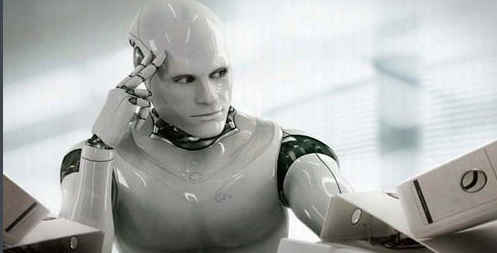
How astronomers apply artificial intelligence:
1) stop consonant coordination with a telescope
Tom wittrand of Los Alamos National Laboratory said that the large telescope that observes the sky will stop observing the "short sky phenomena" -- they are the source of new signals or "night sky".
Some of these things, such as gamma ray storms, are called "black hole birth announcements" by Vestrand - less than a minute in duration. In such a short time, their needs are detected, classified as real or false things (for example, a flying airplane), and then aligned with the most suitable telescope, so as to further stop the investigation.
With a telescope like LSST, there are 50 thousand transient events that may be detected every night. At the same time, hundreds of telescopes in the world will work together. "The artificial speed was not up to the machine," Waite Rand said. "These jobs need machines to complete."
2) dissection of data
In two years time, every 30 minutes, the full picture of NASA model transiting exoplanet survey satellite will be returned nearly half of the sky, 20 million stars provide information for astronomers to see.
"About the future of these stars than our previous total data will understand more," said 1987. Next, AI can stop classifying it. If they have some similarities, they can be combined together, and then hand over to humans to see "1% of AI can't be identified".
The idea at that time is that AI can classify data and combine similar data together, and then it will be stopped by human beings to analyze "1% of AI can not be identified". Li Brown said: "using neural network tools can get the temperature information or metal properties of stars, which is not only more accurate than our previous methods, but also faster than the previous one billion times." Machine learning should now be used to study black holes for the search of exoplanets and to stop modeling the universe and its parameters. Buzesi said that in dealing with data, AI can perform tasks in a consistent manner, and it is very difficult for human beings to achieve a considerable degree.
3) used to excavate the data
Joshua, Peake of the space telescope scientific research institute said, "most of the astronomical data obtained are discarded, but some of them contain deep physical information, but we don't know how to stop it. Peek says that after these beautiful nebulae images are generated, the information is often discarded. He is developing a machine learning tool called convolution neural network, which can classify images into different objects, and extract feature information from diffuse plasma and gas structure, which is the state of most normal substances in the universe. Then, astronomers will be able to discuss the similarities and differences between different structures in the universe.
One important question is, "how do you write software in order to find something that still doesn't know how to describe it?" Vestrand asked. "There is a common part about unusual things, but what should be done about uncommon unusual things?"
And this will be the real center of new discoveries, because it's obvious that you don't know what they are. "
Bottom line: in the past, algorithm has helped astronomers, but with the development of AI recently, especially the progress of image recognition, the progress of computing speed and the fall of cost, these technologies will be applied by more researchers. Derek Busi F, an astronomer from the Gulf University of Florida, said: "because we cannot effectively handle these data streams, we must change the original form of operation."
For example, Chile's LSST telescope, up to 8.4 meters, will be photographed in the next 10 years with a car size digital camera on the southern sky every few days. In general, it is estimated that it will collect raw data that is over 50 million gigabytes.
Innovation: some new ways, "5 to 10 years ago, did not exist. They presented or improved the computing speed or improved the accuracy of operation," said Donald Lee Brown, a graduate student at University of Kansas. The result shows that in the past five years, the number of astronomical papers that had stopped working on machine learning has increased by 5 times.
How astronomers apply artificial intelligence:
1) stop consonant coordination with a telescope
Tom wittrand of Los Alamos National Laboratory said that the large telescope that observes the sky will stop observing the "short sky phenomena" -- they are the source of new signals or "night sky".
Some of these things, such as gamma ray storms, are called "black hole birth announcements" by Vestrand - less than a minute in duration. In such a short time, their needs are detected, classified as real or false things (for example, a flying airplane), and then aligned with the most suitable telescope, so as to further stop the investigation.
With a telescope like LSST, there are 50 thousand transient events that may be detected every night. At the same time, hundreds of telescopes in the world will work together. "The artificial speed was not up to the machine," Waite Rand said. "These jobs need machines to complete."
2) dissection of data
In two years time, every 30 minutes, the full picture of NASA model transiting exoplanet survey satellite will be returned nearly half of the sky, 20 million stars provide information for astronomers to see.
"About the future of these stars than our previous total data will understand more," said 1987. Next, AI can stop classifying it. If they have some similarities, they can be combined together, and then hand over to humans to see "1% of AI can't be identified".
The idea at that time is that AI can classify data and combine similar data together, and then it will be stopped by human beings to analyze "1% of AI can not be identified". Li Brown said: "using neural network tools can get the temperature information or metal properties of stars, which is not only more accurate than our previous methods, but also faster than the previous one billion times." Machine learning should now be used to study black holes for the search of exoplanets and to stop modeling the universe and its parameters. Buzesi said that in dealing with data, AI can perform tasks in a consistent manner, and it is very difficult for human beings to achieve a considerable degree.
3) used to excavate the data
Joshua, Peake of the space telescope scientific research institute said, "most of the astronomical data obtained are discarded, but some of them contain deep physical information, but we don't know how to stop it. Peek says that after these beautiful nebulae images are generated, the information is often discarded. He is developing a machine learning tool called convolution neural network, which can classify images into different objects, and extract feature information from diffuse plasma and gas structure, which is the state of most normal substances in the universe. Then, astronomers will be able to discuss the similarities and differences between different structures in the universe.
One important question is, "how do you write software in order to find something that still doesn't know how to describe it?" Vestrand asked. "There is a common part about unusual things, but what should be done about uncommon unusual things?"
And this will be the real center of new discoveries, because it's obvious that you don't know what they are. "