
News classification
Contact us
- Add: No. 9, North Fourth Ring Road, Haidian District, Beijing. It mainly includes face recognition, living detection, ID card recognition, bank card recognition, business card recognition, license plate recognition, OCR recognition, and intelligent recognition technology.
- Tel: 13146317170 廖经理
- Fax:
- Email: 398017534@qq.com
AI robots have the ability to "foresee the future"
AI robots have the ability to "foresee the future"
It is well known that human beings will stop thinking about their actions before taking action. For example, if a person wants to play a ball, he may first think about where the ball will go and how to make the ball reach a new position. Usually, robots, especially those who are not equipped with advanced AI programs, do not possess such abilities, because their internal programming allows them to perform simple tasks only.
But it's going to change now. It is understood that the seminars of the University of California at Berkeley have confirmed that robots can also have the ability to perceive them. To prove this, they developed a new robot learning technology, allowing robots to stop thinking early, so as to "make sure how they manipulate objects that have never been encountered before."
This technology is called Visual Foresight, though it doesn't mean that the robot can predict the future, at least not yet.
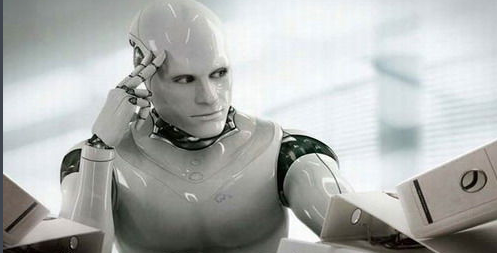
Berkeley University researchers applied the technology to a robot named Vestri, enabling it to predict what can be seen in a few seconds after its own camera. Thanks to this new technology, Vestri can move small objects on the table without touching the surrounding obstacles. But what is most shocking is that with the support of this technology, Vestri can accomplish these small tasks independently without human guidance and surveillance, and without physical knowledge.
"We can imagine how our actions will move the objects in a certain environment. Similarly, the new technology also enables robots to visualize the influence of different behaviors on the surrounding world. Sergey Levine, assistant professor of electrical engineering and computer science, University of California at Berkeley, said, "in complex and ideal environment, it can stop intelligent planning for highly sensitive skills."
Visual foresight is based on "convolution cycle of frequency prediction" or dynamic neural advection (DNA). According to the team, the DNA - based model can predict how the pixels in the image jump from one frame to another according to the behavior of the robot. Just like Levin, a doctoral student in the lab, is also an initial DNA model, creating Chelsea Finn of human beings. It is said that robots like Vestri are now able to learn a series of visual object operation skills independently and autonomously.
Frederik Ebert, a graduate student in the Levin laboratory, was also involved in the study of the technology. He ceased to compare the way the robot operates with the way human beings interact with objects in their own environment.
"Human life will interact with all kinds of objects, so even in the absence of teachers, human beings still control the operation skills of objects." Ebert said, "the study indicates that we can develop a robot system -- using a large number of data collected automatically to learn the manipulative ability of widely applied, especially the detailed objects.
Levin pointed out that the ability of Vestri still has some limitations, and there are still a lot to do to improve the vision technology. But one day, this technology can be used to help auto drive cars on the road to better respond to new environments or unfamiliar objects.
Nevertheless, this technology needs various improvements to accomplish this goal, for example, the more precise video prediction and the way to collect more detailed video data and so on. With these improvements, robots may be able to accomplish more complex tasks, such as picking up and placing objects, disposing of soft and deformable objects such as clothes or ropes. Even one day, the robot can also help us wash clothes.
But it's going to change now. It is understood that the seminars of the University of California at Berkeley have confirmed that robots can also have the ability to perceive them. To prove this, they developed a new robot learning technology, allowing robots to stop thinking early, so as to "make sure how they manipulate objects that have never been encountered before."
This technology is called Visual Foresight, though it doesn't mean that the robot can predict the future, at least not yet.
Berkeley University researchers applied the technology to a robot named Vestri, enabling it to predict what can be seen in a few seconds after its own camera. Thanks to this new technology, Vestri can move small objects on the table without touching the surrounding obstacles. But what is most shocking is that with the support of this technology, Vestri can accomplish these small tasks independently without human guidance and surveillance, and without physical knowledge.
"We can imagine how our actions will move the objects in a certain environment. Similarly, the new technology also enables robots to visualize the influence of different behaviors on the surrounding world. Sergey Levine, assistant professor of electrical engineering and computer science, University of California at Berkeley, said, "in complex and ideal environment, it can stop intelligent planning for highly sensitive skills."
Visual foresight is based on "convolution cycle of frequency prediction" or dynamic neural advection (DNA). According to the team, the DNA - based model can predict how the pixels in the image jump from one frame to another according to the behavior of the robot. Just like Levin, a doctoral student in the lab, is also an initial DNA model, creating Chelsea Finn of human beings. It is said that robots like Vestri are now able to learn a series of visual object operation skills independently and autonomously.
Frederik Ebert, a graduate student in the Levin laboratory, was also involved in the study of the technology. He ceased to compare the way the robot operates with the way human beings interact with objects in their own environment.
"Human life will interact with all kinds of objects, so even in the absence of teachers, human beings still control the operation skills of objects." Ebert said, "the study indicates that we can develop a robot system -- using a large number of data collected automatically to learn the manipulative ability of widely applied, especially the detailed objects.
Levin pointed out that the ability of Vestri still has some limitations, and there are still a lot to do to improve the vision technology. But one day, this technology can be used to help auto drive cars on the road to better respond to new environments or unfamiliar objects.
Nevertheless, this technology needs various improvements to accomplish this goal, for example, the more precise video prediction and the way to collect more detailed video data and so on. With these improvements, robots may be able to accomplish more complex tasks, such as picking up and placing objects, disposing of soft and deformable objects such as clothes or ropes. Even one day, the robot can also help us wash clothes.